
When Horror is Their Normal: Communication Around Childhood Trauma in Video Games

Welcome to Collab Not Multiplayer! This episode is a very special double feature, of Killmonday Games’: Fran Bow and Little Misfortune. First, due to the seriousness of the subject matter I want to acknowledge the clickbaity flippancy of the thumbnail we designed for YouTube. I am using it here for consistency, not to make light of the topics we will dive into below!
Listen on YouTube or Spotify.
Also welcome, new people! We produced this episode differently than normal so listeners could invite people in their lives who do NOT play video games. We wanted to demonstrate some of the depth and importance of the narrative they can present, and for these two games in particular how trauma causes distortions in communication. We made this episode with mental health providers, teachers, and other people who work closely with the public, especially children in mind. Please share with these people in your life if you think it would be helpful.
That being said, none of us are professionals and are not providing any kind of advice. We encourage listeners to use their own discretion and seek those professionals if you need support.
Game Info
Killmonday Games is a small indie developer out of Sweden. Their two largest releases are Fran Bow (2015) and Little Misfortune (2019). I have linked the Steam pages here but both games are available on other platforms as well. We at CNM want to thank Killmonday Games for their work and can’t wait to see what comes next.
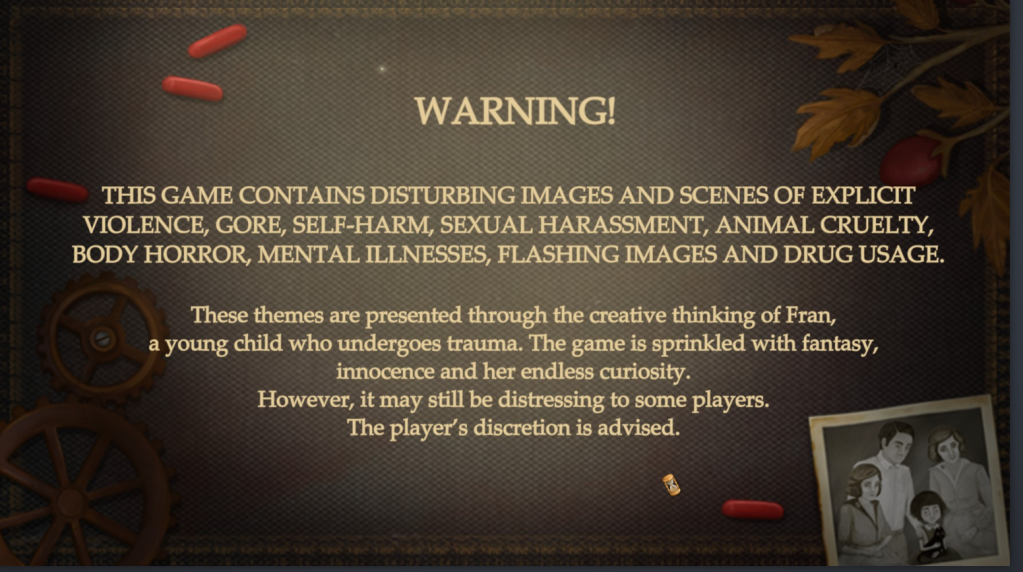
These games are not for everyone, they are not for children, especially. Please use discretion and self care as the topics discussed both in the games and thus this blog/podcast might be triggering.
While we encourage playing these games and supporting Killmonday Games, we understand that not everyone is going to have the desire or ability to play. Our recommendation to is to play Fran Bow, if you can, and watch a playthrough of Little Misfortune. I enjoyed Jacksepticeye’s videos very much: Part 1, Part 2, Part 3. If you can’t play Fran Bow either, some lovely fans made a fully voice acted video of the whole game. While helpful for following the coming discussion neither is necessary for this blog entry or podcast episode.
That all being said: SPOILERS AHEAD. Please play or watch before continuing if avoiding spoilers is important to you, as we always say, “The episode can wait”.
Finally for our gamer friends if you are just here for the memes, feel free to scroll down to the bottom!
For the Professionals
If we are lucky enough to be able to have professionals actually engage this far, welcome!! There may be lots you don’t know about video games. It can be easy to imagine that video games are simply entertainment for children or adults who wish to escape their daily life. Don’t get me wrong they are both those things but also so much more. Video games as a whole present a very broad, complex ever growing and changing set of, basically “packaged experiences”. They range from simple digitized Sudoku and crossword puzzles to epic stories that you play with thousands of other people across the world. Some is well presented some is not, the same as any medium. That is what video games are, an interactive medium of expression as capable of achieving art, education and nuance as film, music, literature, or even theatre are.
Video games have the capacity to provide engaging interactive narratives, space for safely making mistakes and having struggles (especially in single player), and the ability to make the player complicit in the actions of the characters, which is a layer no other medium can provide. All this is accessible to people of all backgrounds to partake in the privacy of their own homes.
The games this blog/podcast are discussing today, Fran Bow and Little Misfortune are admittedly dropping you in the deep end. These are not easy or “fun” narratives to explore and they expect the player to feel uncomfortable as they play. That doesn’t mean they are not enjoyable experiences, the same way that watching an art film or going to a gallery may expose you to uncomfortable situations or subjects. I am hoping with this exposure and introduction we (CNM) can help widen the common understanding of what video games are and how powerful they can be as an expressive medium.
While there are many themes in Fran Bow and Little Misfortune, the one I want to focus on is how trauma and neglect impact our ability to communicate about our experiences. My perspective going into these stories is one of a person who has been in therapy for years, and has a PTSD diagnosis. I have lived experience navigating mental health services, and medical philosophy around trauma. I have had good experiences and bad ones dealing with professionals around my trauma and its effects on my life.
Trauma has a distancing effect. It skews reality, the words that work to talk about it often have more than one meaning and nuance is often not explored leaving the survivor at a communication deficit. Childhood neglect can compound this effect because the child is calibrating their normal through what for other people would be a traumatized lens.
I first want to discuss Little Misfortune. In this game Misfortune is an 8 year old girl, who exhibits so many of the red flags for childhood neglect and abuse. She talks just like these children do. So much so, I knew I needed to encourage people in my life to at least watch playthroughs of this game so they can be aware.
Misfortune uses curse words out of syntax, talks about adult subjects in child terms, eats off the floor, casually mentions violence in her home, and many, many more. Any one of these could just be the exuberance of childhood. Together though, they make an unmistakable pattern, that no one in her life seems to have noticed.
While Misfortune exists in a fiction, telling a story partially for entertainment, other real live kids present evidence of their neglect every day. If you’ve seen clips of Little Misfortune in media (YouTube or TikTok especially) it was likely a few scenes where it appears that this game is just having a kid character say shocking things for effect. I think, yes, the shock was intentional, but to a purpose. That kind of “kids say the darndest things” deserves more critical examination. Misfortune is not saying those things to shock Mr. Voice, she’s just telling stories of her life. Which while exaggerated in the video game represent a pattern that shows up in life.
My hope is that more people will play/watch Little Misfortune and other stories that really show how neglect and child abuse present in life. It can be subtle and seem a lot like kids being kids.
I’m not a professional, I don’t know what, necessarily is best to do if we do see this in our everyday life. I have known kids in my life who did need a lot more support than they got, and they exhibited signs a lot like this. One place for more information is the CDC website.
Fran Bow presents a more classical PTSD type of trauma situation. By that I mean she had a normal life that she can remember, then a large single traumatic event, the discovery of her murdered parents. Anyone having that experience would be likely to develop PTSD.
Throughout the game, Fran takes pills, that let her see another layer of reality. What she sees are often horrible visions involving gore. She handles these with a calmness and curiosity that as a survivor of trauma myself, I found this very validating of my experience. The visions we see through Fran on Duotine (the name of this fictional drug) work as a metaphorical presentation of flashbacks and how they impair function. Fran can still walk around and interact with objects, but she isn’t seeing or hearing the people around her. She isn’t capable of conversation until the effects wear off. Luckily enough this is a video game so the player turns on and off the effect instantly by clicking on the pill bottle, unlike how any of that would work in life. This trauma lens isn’t purely detrimental though, it shows her what the people around her are going through and patterns that help her progress through the story.
There is no way for Fran to adequately talk about these experiences in a way that the people around her will understand. She is isolated in her reality. Especially in the first chapter, while she is still in the hospital, this leaves her trapped with adults who are interpreting her behaviors as deliberate troublemaking. The story makes it clear that while her behavior does cause “trouble”, that is a side effect, not what she is trying to do.
This vilification of her behavior doesn’t help her understand what is happening, trust her caregivers or cope with the ways her reality is no longer matching the shared reality ie. “normal”. This represents a very common feeling among trauma survivors. It can be easy to form quick judgements about intentions of people exhibiting abnormal behavior. I have found myself judged more than once. The thing is once I get a chance to both give myself grace for what I’m going through and understand fully the impact of what I’m doing, I’m so much more likely to want to change. The important part is I need to be included in the process. I don’t necessarily need empathy or understanding for my intentions, I need space to give that to myself. My intentions are frankly my own business, especially if I’m being judged for a trauma response.
People may react badly to being startled, touched, referred to by nicknames or things like “sweetie”, being exposed to certain noises or perfumes, etc. They do not owe anyone details as to why they have that negative reaction, in order to take responsibility for the impact of that reaction.
Fran is doing her best against terrible circumstances. She, though fictional in a fantastical narrative, is a good reminder of how we never know anyone else’s struggles. People experiencing trauma responses need kindness and grace as much or more than everyone else.
***** Memes*****


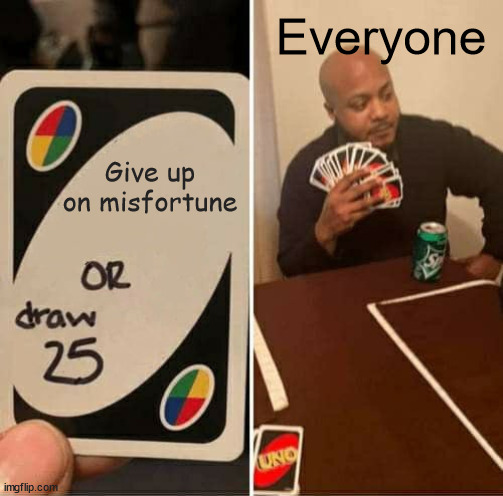


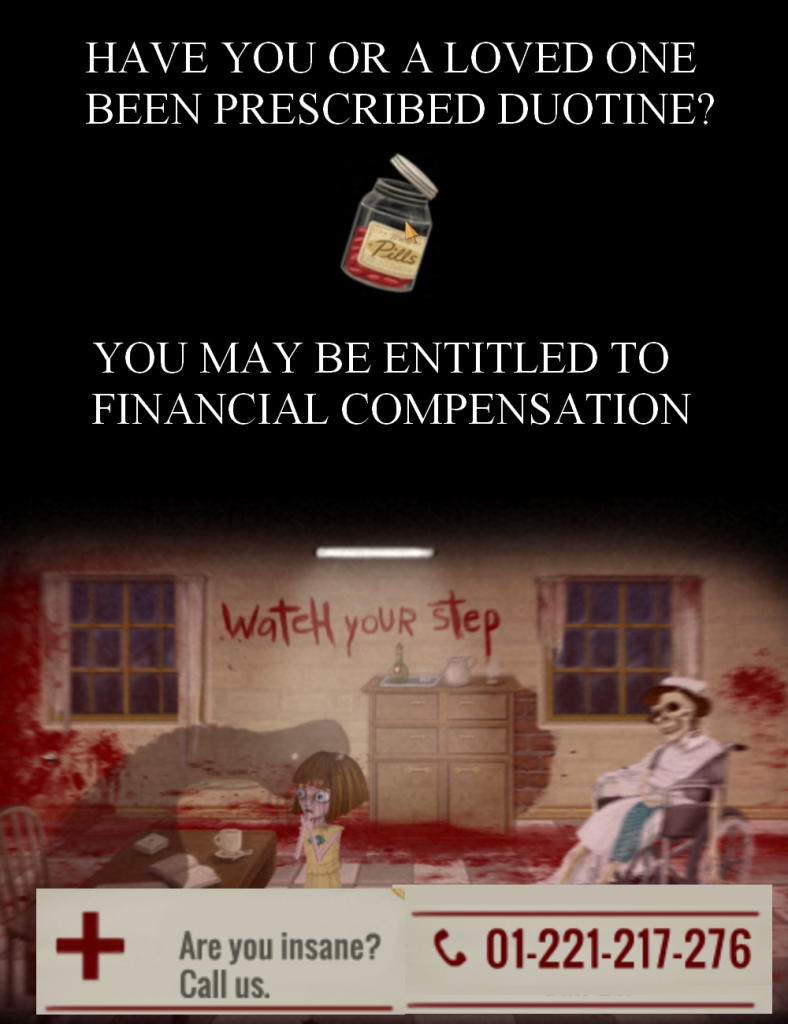


Please do “steal” memes if they caught you in a chuckle or you know someone who can relate. Seeing one of them in the wild pop up again would be such a joy.
Thank you so much for listening/reading if you made it this far! Feedback and comments are welcome both here and on the podcast itself.
Our next episode takes us to the very chill isle of Mutazione! Hope to see you then-Giggleklutz
 Collab Not Multiplayer
Leave a comment